Category: Health
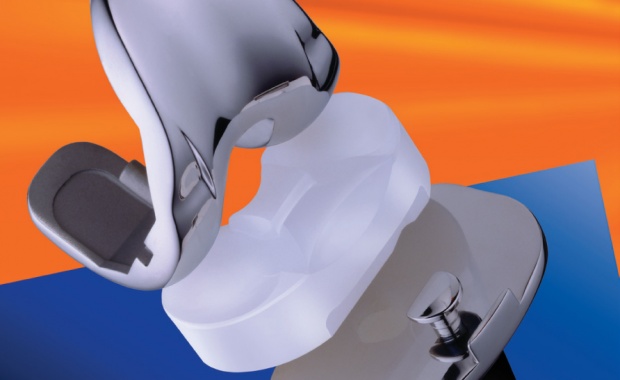
Clients are always wanting to know information regarding Yoga poses and their impact upon movement with prosthetic knees.
These links provide information about how a person’s baseline anatomy affects range of motion as well as how a type of implant may affect ability to move the joint.
https://orthoinfo.assos.org/en/treatment/knee-replacement-implants/
This article provides information regarding the types of implants and their structures based upon which ligaments are moved or replaced. The decision depends upon the integrity of the surrounding cruciate ligaments.
Cruciates are ligaments that cross each other and are on the inside of the knee joint. There are 2 inside the knee that hold the femor and tibia closely together. The one in the front is named the ACL (Anterior Cruciate Ligament) and one in the back labeled the PCL (Posterior Cruciate Ligament). The word cruciate means “crossing”. David Keil, a Licensed Massage Therapist and Certified Neuromuscular Therapist, illustrates a clear picture and explanation of these in his book Functional Anatomy of Yoga A Guide for Practitioners and Teachers on Page 71. It is a book worth owning even if you are not a Yoga Teacher.
https://bonesmart.org/knee/knee-replacement-implant-materials/
This article contains information regarding the various materials from which implants are created. This seems to address decisions made upon a possible allergy toward other implants.
https://www.ncbi.nim.nih.gov/books/NBK499896
This takes a look at implants and how they are designed based upon the current stability of the cruciate ligaments. The discussion is based upon the surgeon’s decision whether or not to remove the PCL.
https://bonesmart.org/knee/types-of-total-knee-implants/
This article reviews fixed versus mobile implants.
Once an individual has knee replacement(s) it is important to follow your doctor’s post-op instructions exactly. Rehab with a Physical Therapist is usually implemented after the first post-op visit. Once you are discharged from PT, get clearance from your doctor to take a Yoga Class from a Certified Yoga Therapist or Healthcare Professional who is skilled with teaching Yoga Classes to individuals who are physically challenged.
The way I prepare clients toward strengthening the integrity of the muscles that support the knee is to provide education about the anatomy of the leg. The longest muscle in the body is called the Sartorius muscle whose function is to move the hip and knee. This is the only muscle that covers 2 joints within the body. The links below are videos about the Sartorius muscle.
Kenhub is an excellent resource to learn about the human anatomy. I am providing the link for educating you about the Sartorius muscle.
Beaulieu Yoga classes are structured to increase the integrity of this muscle along with the quads, glutes and core. These all work together to provide stability for our knees. Modifications are queued in case there is a concern for any issues.Thank you, Gabriela Ferroni, BSN, RN for providing the research posted in this blog. Gabriela is a Licensed Registered Nurse in the state of Pennsylvania working on an Orthopedic Unit.
Categories
Improve Shoulder strength and mobility
Teaching Yoga to my tribe of people over the age of 50 includes modifications for asanas that prove difficult for some. Yoga props are imperative not only to support the body but to explore ways to enhance a Yoga pose.
Recently, I came across Rocky Heron, a Yoga Teacher, who is a new resource for me. Yoga International is an Association that offers Yoga Instructors continuing education on-line and offers a class entitled “Isometric Strength Drills”. Rocky’s approach to improve shoulder mobility offers a unique approach that explores the gaps that traditional Yoga does not address.
This is a video that addresses his style of teaching which enhances my style of teaching Ashtanga Yoga and Slow Flow Yoga Classes. Enjoy.
Categories
SELF-CARE AND THE ART OF HANDWASHING
This is the 200th Celebratory year of Florence Nightingale’s birth (May 12, 1820). Florence was the first practicing Nurse Epidemiologist in the world (“Fundamentals of Nursing”, Eighth Edition; Patricia Potter & Anne Perry; Page 2).
Epidemiology is the study (scientific, systematic, and data-driven) of the distribution (frequency, pattern) and determinants (causes, risk factors) of health-related states and events (not just diseases) in specified populations (neighborhood, school, city, state, country, global). (cdc.gov)
Consequently, 2020 is designated by the World Health Organization as the “Year of the Nurse”. This acknowledgement motivates me to raise the awareness level of sanitary techniques introduced by Florence during the Crimean War in the mid-1800’s that decreased infection rates of soldiers from 43% to 2%. (Fundamentals of Nursing”, Eighth Edition; Patricia Potter & Anne Perry; Page 2).
One effective way to help prevent any virus or bacteria from spreading is through thorough handwashing techniques. This is a list of two that I have been using and teaching clients:
ALCOHOL BASED HAND SANITIZER:
1 – Apply a dime-sized amount (2-3 drops) into palms of dry hands
2 – Rub product into the hands as follows:
Placing palm to palm begin applying onto fingertips of each hand rubbing between and around fingers.
Rub each thumb and the back of each hand with opposite palm.
3 – Rub hands until dry and do not wipe off.
This technique is effective if hands do not have any food, clinging dirt or other noticeable substances. Otherwise use warm running water and soap technique.
HAND WASHING WITH RUNNING WARM WATER AND SOAP
1 – Wet hands under running water
2 – Apply soap by rubbing over hands vigorously to create an abundant lather
3 – Rub palm to palm, fingertips of each hand going in between and around fingers
4 – Clasp each thumb then finish rubbing the back of each hand with opposite palm
5 – Rinse hands thoroughly under warm running water
Repeat this technique if you want to be sure that you gave yourself enough time to thoroughly sanitize yourself after using the gas pump, shopping carts, ATM machines, or other items in public places.
Take the time to be cautious not only during this Covid19 panic but all throughout the year.
Namaste,
Nurse Judith
The revised Joint Commission Accreditation Standards for Health Care Organizations became effective January 1, 2018 which includes…” involving patients in developing their treatment plans and setting realistic expectations and measurable goals.” (www.jointcommission.org; The Joint Commission Perspectives; July 2017, Volume 37, Number 7.)
This calls for assigning a Health Coach to partner and coordinate the many aspects of life to overcome roadblocks and achieve goals.
What to expect through the process of Health Coaching:
§ Health Coaching brings ideas and information from all areas of life to help patients in developing their “individualized” treatment plan.
§ Health Coaching educates patients by translating research or concepts into understandable language.
§ Health Coaching assists in formulating questions directed to Insurance Providers and Healthcare Professionals involved in treatment plans.
§ Health Coaching establishes partnership with referrals to properly credentialed complementary therapists and healthcare professionals.
The Joint Commission published Facts About Joint Commission Accreditation Standards For Health Care Organizations: Pain Assessment and Managementunder the “Topics” menu on February 26, 2018. These standards require hospitals to revise their policy and procedures. Included in the revisions the Joint Commission requires accredited hospitals to establish policy and procedures, based on clinical determination where appropriate, that includes providing… “at least one non-pharmaceutical pain treatment modality”. www.jointcommission.org/facts_about_joint_commission_accredi…dards_for_health_care__organizations_pain_assessment_and_management/
HEALING TOUCH:
There are many complementary modalities. One that best suits the hospital setting is Healing Touch. Healing Touch is an energy healing therapy in which practitioners consciously use their hands in a heart-centered and intentional way to enhance, support and facilitate physical, emotional, mental and spiritual health and self-healing. Healing Touch utilizes using light or near body touch to clear, balance and energize the human energy system in order to promote health and healing for mind, body and spirit.
This modality has been developed in the 1980s by a nurse, Janet Mentgen RN, BSN, HTP/1, HNC. Healing Touch was revolutionized as a medical model by Janet which includes a clinical approach to energy based therapy that is taught within the Healing Touch Program. (www.healingtouchprogram.com) Subsequently, the American Nurses Association, American Holistic Nurses Association and the National League of Nursing endorses Healing Touch. Certification in Healing Touch is attained through the American Nurses Credentialing Center’s Commission on Accreditation.
Namaste, Nurse Judith
Categories
The Daily Bandha: The Supraspinatus Muscle
Whether Carpal Tunnel Syndrome (CTS) is interfering with your work, crafts, or sleep, finding relief from pain quickly starts with understanding how CTS occurs. CTS is the result of inflammation around the medial nerve passing from the forearm through the wrist into the cannal, also known as the “Carpal Tunnel.” Although musicians and administrative assistants often feel that repetitive motion activities cause their pain, Harvard researcher, David Ring, MD told his fellow orthopedic surgeons in 2007 that the underlying cause of Carpal Tunnel Syndrome more often is genetic. Ring found that there is more evidence of narrow canals responsible for CTS and only weak evidence for typing and other repetitive movements of the hands. (Ring: 2007)
Inflammation can cause or aggravate inflammatory conditions at another site which explains why arthritis, obesity, and diabetes all raise the risk of this painful disorder. Conversely, blocking inflammation and treating it wherever it exists may also improve CTS.
The diagnosis of CTS can be made by a physician or chiropractor. Beyond a physical examination, lab studies are used to rule out arthritis, gout and diabetic nerve damage, any of which can mimic the symptoms of CTS. Because each condition requires a different treatment approach, getting the right diagnosis is important. Some measures can be taken even before a medical diagnosis is made.
Fascial manipulation, a massage technique offered through chiropractors and physical therapists is a non-invasive approach that involves manual manipulation of the fascia, a membrane of connective tissue that surrounds muscle and groups of muscles, blood vessels and nerves. A study led by Dr. E. Pratelli and published in the Journal of Bodywork and Movement Therapies, January 2015, found fascial manipulation to significantly reduce pain. (Pratelli:2014)
Eating anti-inflammatory foods such as berries, fish, avocados, nuts and vegetables and avoiding sugar, wheat, processed foods and saturated fats can provide relief; likewise, positioning the wrists above the hands may minimize pain during periods at the computer keyboard or while playing a musical instrument. Another anti-inflammatory lifestyle intervention recommended by the National Institutes of Health is getting 6 ½ to 7 ½ hours of sleep each night and waking at the same time each day. (Sabanayagam: 2010)
Track the results of these interventions daily and identify which ones are providing optimal relief for your CTS. There are no downsides to using them and their added benefit provides an overall feeling of well-being.
###
Works Cited
Pratelli, Elisa, MD. “Conservative Treatment of Carpal Tunnel Syndrome: Comparison between Laser Therapy and Fascial Manipulation.” Journal of Bodywork and Movement Therapy 19.1 (2015): 113-18. Print.
Ring, David M., M.D. “Gentic Cause of Carpal Tunnel.” Proc. of 74th Annual Meeting of the American Academy of Orthopaedic Surgeons, San Diego.
Sabanayagam, Charumathi, M.D., Ph.D. “Sleep Duration and Cardiovascular Disease: Results from the National Health Interview Survey.” Web.
Categories
The Detriment of the Integument System
Recent findings about the risks associated with the use of tanning beds and the incidence of skin cancers have hit the news. The WHO (World Health Organization) and the IARC (International Agency for Research on Cancer) have added UV radiation-emitting tanning devices (beds and lamps) as the most dangerous forms of cancer causing radiation.
The risk of melanoma – the deadliest form of skin cancer – has been found to increase by 75% for those individuals under 30 years of age. Why this age group and not older? The reason is that the younger population use it as a means to darken the skin in order to appear darker-skined which has been considered appealing in the eyes of teens and young adults. They frequent the tanning beds more often than older adults and therefore expose themselves to the dangers of UV radiation on the skin.
Tanning began as an unintentional trend back in 1923 when the fashion icon, Coco Chanel, became overly exposed to the sun while sleeping on-deck of a yacht while sailing in the South of France. At the time of this incident, women protected themselves from the sun using parasols and covering up as much of their exposed skin in order to protect themselves from getting burned. (http://health.howstuffworks.com/skin-care/beauty/sun-care/spray-tanning/.htm)
The skin is the largest organ of the body. It is responsible for protecting deeper tissues from injury. It regulates body temperature and has excretory and absorbing functions. Knowing this about skin, how does burning it to a point of discoloration affect your health? Today, this is known to happen when human skin is exposed to UV rays. The sun can cause unhealthy changes to your skin, dehydrate your body and cause cancer. There are other things to consider when exposed to UV light such as medications that make the skin and eyes more sensitive to sunlight. A brief list includes acne medicines, antibiotics, antihistamines, oral contraceptives and sulfa drugs. The tanning industry misleads the public about these health risks which has led organizations such as the American Academy of Pediatrics to ban tanning beds and lamps being used by individuals under 18 years of age. (www.skincancer.org)
In lieu of tanning beds and lamps, if each of us took a walk in the early morning sunshine for about 1 hour, it benefits the human body with Vitamin D needed for healthy bones and for the absorption of calcium. However, beyond this amount requires applying at least an SPF 30 sunblock and “limiting” your time of sun exposure by moving into the shade, wearing a hat and sunglasses.
May has been designated as “Skin Cancer Awareness Month” by the US Government. Congressman Jim Gerlach of the 6th District within my beautiful community of Chester County, Pennsylvania, has supported the FDA initiative on sun safety and has provided the following FDA intervention:
“….the U.S. Food and Drug Administration (FDA) announced new requirements for over-the-counter sunscreen labels in June 2011, which will be effective starting this summer. These labeling requirements will ensure that the standards for safety and effectiveness are met and consumers like yourself can make an informed decision when purchasing sunscreen. While prior rules on sunscreens focused exclusively on ultraviolet B (UVB) radiation to protect against sunburn, those rules did not address ultraviolet A (UVA) radiation, which contributes to skin cancer and early skin aging. As a result, FDA established a “broad spectrum” to establish that a given sunscreen provides proportional UVA and UVB protection.”
Another way to safeguard against skin cancer is by getting a full body check by a dermatologist. A yearly visit is all that is necessary to keep a professional’s eye on skin changes. WebMD.com has pictures on the appearance of different skin cancers. This information is valuable in assisting you with your own assessments in between the yearly visits to the dermatologist.